
JavaScript is the backbone of modern web development and one of the most in-demand programming languages in the software industry. Today, JavaScript powers not only the frontend of web applications but also the backend through Node.js, making it possible to build complete end-to-end applications using a single programming language.
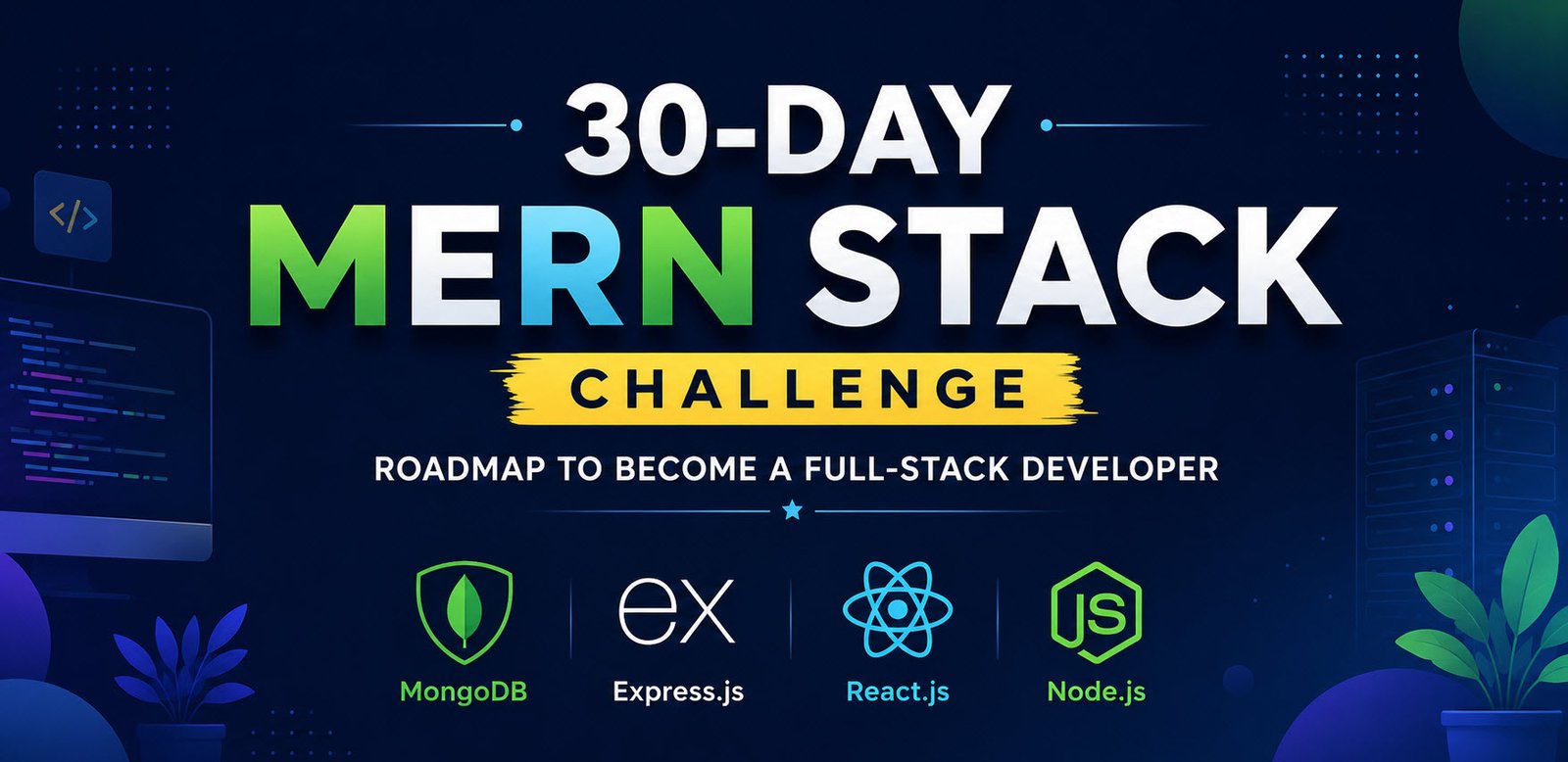
Popular technology stacks such as MERN (MongoDB, Express.js, React.js, Node.js), MEAN (MongoDB, Express.js, Angular, Node.js), MEVN (MongoDB, Express.js, Vue.js, Node.js), and other modern frameworks rely heavily on JavaScript concepts including closures, promises, asynchronous programming, DOM manipulation, event handling, modules, and object-oriented programming.
For aspiring developers, recruiters often evaluate JavaScript skills before assessing framework-specific knowledge because concepts learned in JavaScript form the foundation of technologies like React, Angular, Next.js, Vue.js, Express.js, and Node.js. A solid grasp of JavaScript not only helps you crack interviews but also enables you to write efficient, scalable, and maintainable applications in real-world projects.
This collection of 100 JavaScript Interview Questions is designed to help students, freshers, and experienced professionals strengthen their core JavaScript knowledge.
The questions cover everything from basic concepts and ES6+ features to arrays, objects, functions, asynchronous programming, promises, event loop, DOM manipulation, browser APIs, storage mechanisms, performance optimization techniques, and advanced JavaScript concepts frequently asked in technical interviews.
Let’s test your JavaScript knowledge with these 100 carefully curated interview-focused MCQs and prepare for your next Full Stack Developer opportunity!
1. What is JavaScript?
A. A database language
B. A stylesheet language
C. A scripting language used to create dynamic web pages
D. An operating system
Correct Answer: C
2. What are the different data types in JavaScript?
A. String, Number, Boolean, Undefined, Null, Symbol, BigInt, Object
B. Int, Float, Character only
C. String and Number only
D. None of the above
Correct Answer: A
3. What is the difference between var, let, and const?
A. All are identical
B. var is function-scoped, let and const are block-scoped; const cannot be reassigned
C. Only const creates variables
D. let is global only
Correct Answer: B
4. What are primitive and non-primitive data types?
A. Primitive types hold single values; non-primitive types hold collections or objects
B. Both are the same
C. Arrays are primitive
D. Objects are primitive
Correct Answer: A
5. What is type coercion?
A. Manual type conversion only
B. Automatic conversion of one data type to another by JavaScript
C. Deleting a variable
D. Creating classes
Correct Answer: B
6. What is the difference between == and ===?
A. No difference
B. == checks value only; === checks value and type
C. === is deprecated
D. == checks type only
Correct Answer: B
7. What are truthy and falsy values?
A. Values that evaluate to true or false in a Boolean context
B. Only true and false
C. Numeric values only
D. String values only
Correct Answer: A
8. What is undefined?
A. A variable declared but not assigned a value
B. A keyword for deleting variables
C. An error condition
D. A string type
Correct Answer: A
9. What is null?
A. An undeclared variable
B. An intentional absence of any value
C. A number
D. A Boolean value
Correct Answer: B
10. What is NaN?
A. A valid number
B. Not-a-Number value representing an invalid numeric result
C. Undefined value
D. Null value
Correct Answer: B
11. What is the typeof operator?
A. Deletes variables
B. Returns the data type of a value
C. Creates objects
D. Converts strings to numbers
Correct Answer: B
12. What are template literals?
A. Strings enclosed in backticks ( ) allowing interpolation
B. HTML templates only
C. Comments in JavaScript
D. Regular expressions
Correct Answer: A
13. What are JavaScript operators?
A. Special symbols used to perform operations on values
B. Functions only
C. Variables only
D. Objects only
Correct Answer: A
14. What are ternary operators?
A. Operators with three operands used as a shorthand for if-else
B. Mathematical operators only
C. Loop operators
D. Comparison operators only
Correct Answer: A
15. What is variable hoisting?
A. Moving variables physically to the top of code
B. JavaScript’s behavior of processing declarations before execution
C. Copying variables
D. Deleting variables
Correct Answer: B
16. What is scope in JavaScript?
A. Memory allocation
B. The accessibility of variables and functions
C. A type of loop
D. Error handling
Correct Answer: B
17. What are global, function, and block scope?
A. Types of loops
B. Levels of variable accessibility
C. Object properties
D. Promise states
Correct Answer: B
18. What is strict mode (“use strict”)?
A. A debugging tool
B. A mode that enforces stricter parsing and error handling
C. A module system
D. A database feature
Correct Answer: B
19. What are comments in JavaScript?
A. Code that is ignored during execution
B. Executed statements
C. Variables
D. Operators
Correct Answer: A
Also Read: 100 Most Important Data Science Multiple Choice Questions With Answers
20. What are JavaScript modules?
A. Functions only
B. Reusable pieces of code with import/export capabilities
C. Loops
D. Variables
Correct Answer: B
21. What is a function?
A. A reusable block of code designed to perform a task
B. A variable type
C. A database query
D. An object property only
Correct Answer: A
22. What is a function expression?
A. A function assigned to a variable
B. A global function only
C. A class method only
D. A loop construct
Correct Answer: A
23. What are arrow functions?
A. Functions created using the => syntax
B. Functions that return arrays only
C. Deprecated functions
D. Functions that cannot accept parameters
Correct Answer: A
24. What is an IIFE (Immediately Invoked Function Expression)?
A. A function executed immediately after it is defined
B. A callback function
C. A built-in JavaScript method
D. A Promise
Correct Answer: A
25. What are callback functions?
A. Functions passed as arguments to other functions and executed later
B. Functions that return numbers only
C. Functions without parameters
D. Built-in functions
Correct Answer: A
26. What are higher-order functions?
A. Functions that operate on other functions or return functions
B. Functions with multiple parameters
C. Functions that cannot return values
D. Built-in JavaScript functions only
Correct Answer: A
27. What are closures?
A. Functions that remember and access variables from their outer scope even after the outer function has executed
B. Functions without parameters
C. Loops inside functions
D. Block-scoped variables
Correct Answer: A
28. What is lexical scope?
A. Scope determined by where variables and functions are declared in code
B. Dynamic scope at runtime
C. Global variables only
D. Module scope only
Correct Answer: A
29. What is the this keyword?
A. Refers to the current execution context/object
B. Refers to the global scope only
C. Refers to a function name
D. Refers to the parent class only
Correct Answer: A
30. What are object literals?
A. A way to create objects using curly braces {}
B. Arrays with key-value pairs
C. Functions returning objects only
D. JSON files
Correct Answer: A
31. How do you create objects in JavaScript?
A. Using object literals, constructors, classes, or Object.create()
B. Using only classes
C. Using only arrays
D. Using loops
Correct Answer: A
32. What is object destructuring?
A. Extracting properties from objects into variables
B. Deleting object properties
C. Converting objects to arrays
D. Creating new objects
Correct Answer: A
33. What is the spread operator (…)?
A. Expands iterable elements into individual items
B. Combines only strings
C. Creates loops automatically
D. Defines functions
Correct Answer: A
34. What is the rest operator?
A. Collects multiple elements into a single array
B. Stops function execution
C. Merges objects only
D. Creates promises
Correct Answer: A
35. What are default parameters?
A. Predefined values assigned to function parameters when no argument is provided
B. Required parameters
C. Global variables
D. Callback functions
Correct Answer: A
36. What is optional chaining (?.)?
A. Safely accesses nested object properties without throwing errors
B. Creates optional variables
C. Checks array length
D. Converts null to strings
Correct Answer: A
37. What is nullish coalescing (??)?
A. Returns the right operand when the left operand is null or undefined
B. Performs logical AND
C. Compares two values
D. Creates default objects
Correct Answer: A
38. What are object methods?
A. Functions stored as object properties
B. Object variables
C. Array methods only
D. Constructors
Correct Answer: A
39. What is method chaining?
A. Calling multiple methods sequentially on the same object
B. Nesting loops
C. Using multiple objects together
D. Recursive method calls only
Correct Answer: A
40. What is object freezing and sealing?
A. Methods that restrict modifications to objects
B. Methods that delete objects
C. Methods that create immutable arrays only
D. Methods that clone objects
Correct Answer: A
41. How do arrays work in JavaScript?
A. Arrays store ordered collections of values
B. Arrays store key-value pairs only
C. Arrays cannot hold mixed data types
D. Arrays are immutable
Correct Answer: A
42. What is the difference between map() and forEach()?
A. map() returns a new array; forEach() does not
B. Both return new arrays
C. Both return undefined
D. forEach() returns a new array
Correct Answer: A
43. What is filter()?
A. Creates a new array containing elements that satisfy a condition
B. Removes duplicates automatically
C. Sorts an array
D. Finds array length
Correct Answer: A
44. What is reduce()?
A. Reduces an array to a single accumulated value
B. Removes items from arrays
C. Merges objects only
D. Creates new arrays only
Correct Answer: A
45. What is find()?
A. Returns the first element that matches a condition
B. Returns all matching elements
C. Returns an index only
D. Sorts elements
Correct Answer: A
46. What is findIndex()?
A. Returns the index of the first matching element
B. Returns all matching indices
C. Returns the element itself
D. Removes an element
Correct Answer: A
47. What is some()?
A. Checks whether at least one element satisfies a condition
B. Checks whether all elements satisfy a condition
C. Returns matching elements
D. Creates a new array
Correct Answer: A
48. What is every()?
A. Checks whether all elements satisfy a condition
B. Checks whether one element satisfies a condition
C. Sorts an array
D. Returns a filtered array
Correct Answer: A
49. What is the difference between slice() and splice()?
A. slice() returns a portion without modifying the array; splice() modifies the original array
B. Both modify the array
C. Both create copies only
D. splice() works only on strings
Correct Answer: A
50. What are push(), pop(), shift(), and unshift()?
A. Array methods used to add and remove elements
B. String methods
C. Object methods only
D. Promise methods
Correct Answer: A
51. How do you sort arrays in JavaScript?
A. Using the sort() method
B. Using the filter() method
C. Using the map() method
D. Using the reduce() method
Correct Answer: A
52. What is array destructuring?
A. Extracting array values into individual variables
B. Deleting array elements
C. Converting arrays into objects
D. Sorting arrays
Correct Answer: A
53. What are Sets?
A. Collections of unique values
B. Arrays with indexes
C. Objects with properties
D. Functions with parameters
Correct Answer: A
54. What are Maps?
A. Collections of key-value pairs where keys can be of any type
B. Arrays of objects only
C. Objects without properties
D. Database tables
Correct Answer: A
Also Read: Top 10 Tricky SQL Interview Questions (With Examples and Explanations)
55. What are Symbols?
A. Unique and immutable primitive values used as object property keys
B. String values only
C. Mathematical operators
D. Array methods
Correct Answer: A
56. What are generators?
A. Functions that can pause and resume execution using yield
B. Functions that execute only once
C. Callback functions
D. Arrow functions
Correct Answer: A
57. What are iterators?
A. Objects that define a sequence and provide access to values one at a time
B. Loops only
C. Array methods
D. Promise methods
Correct Answer: A
58. What is destructuring assignment?
A. A syntax for unpacking values from arrays or properties from objects
B. A method to delete variables
C. A sorting technique
D. A way to merge objects
Correct Answer: A
59. What is dynamic import?
A. Loading modules on demand using import()
B. Automatically importing all files
C. Importing CSS files only
D. A replacement for functions
Correct Answer: A
60. What are ES6 modules?
A. A standardized module system using import and export
B. Database modules
C. CSS modules only
D. Browser plugins
Correct Answer: A
61. What is asynchronous programming?
A. Executing tasks without blocking the main thread
B. Running tasks one after another only
C. Executing code synchronously
D. Creating objects
Correct Answer: A
62. What is the event loop?
A. A mechanism that handles asynchronous operations and callback execution
B. A looping structure
C. A DOM method
D. An array iterator
Correct Answer: A
63. What is the call stack?
A. A data structure that keeps track of function execution
B. A list of variables
C. A collection of events
D. A storage API
Correct Answer: A
64. What is the callback queue?
A. A queue where completed callback functions wait before execution
B. A queue for variables
C. A Promise state
D. A DOM event
Correct Answer: A
65. What are Promises?
A. Objects representing the eventual completion or failure of an asynchronous operation
B. Functions that run instantly
C. Event listeners
D. Loops
Correct Answer: A
66. What are the states of a Promise?
A. Pending, Fulfilled, Rejected
B. Start, Run, End
C. Waiting, Running, Done
D. Open, Closed, Complete
Correct Answer: A
67. What is async/await?
A. Syntax that simplifies working with Promises
B. A replacement for functions
C. A DOM API
D. An array method
Correct Answer: A
68. What is Promise.all()?
A. Waits for all Promises to resolve and rejects if one fails
B. Runs one Promise at a time
C. Returns only the first Promise result
D. Ignores rejected Promises
Correct Answer: A
69. What is Promise.race()?
A. Settles as soon as the first Promise settles
B. Waits for all Promises
C. Runs Promises sequentially
D. Returns all results
Correct Answer: A
70. What is Promise.allSettled()?
A. Waits for all Promises and returns their results regardless of success or failure
B. Resolves only successful Promises
C. Rejects immediately if one Promise fails
D. Returns only one Promise result
Correct Answer: A
71. What is fetch()?
A. A modern API used to make network requests
B. A local storage method
C. A DOM event
D. A data type
Correct Answer: A
72. What is AJAX?
A. A technique for updating web pages asynchronously without reloading the page
B. A JavaScript framework
C. A CSS feature
D. A database technology
Correct Answer: A
73. What are Web APIs?
A. Browser-provided APIs that JavaScript can interact with
B. JavaScript keywords
C. Array functions
D. CSS libraries
Correct Answer: A
74. What is setTimeout()?
A. Executes a function once after a specified delay
B. Executes repeatedly at intervals
C. Stops a timer
D. Creates a Promise
Correct Answer: A
75. What is setInterval()?
A. Executes a function repeatedly at specified intervals
B. Executes only once
C. Clears a timer
D. Delays script loading
Correct Answer: A
76. What is clearTimeout()?
A. Cancels a timer created by setTimeout()
B. Creates a new timeout
C. Stops all JavaScript execution
D. Clears browser cache
Correct Answer: A
77. What is clearInterval()?
A. Stops a timer created by setInterval()
B. Starts a new interval
C. Pauses the event loop
D. Clears localStorage
Correct Answer: A
78. What is callback hell?
A. Deeply nested callbacks that make code difficult to read and maintain
B. Multiple loops inside a function
C. An error caused by callbacks
D. A Promise rejection
Correct Answer: A
79. How do you avoid callback hell?
A. Using Promises, async/await, and modular functions
B. Adding more callbacks
C. Using global variables
D. Avoiding functions
Correct Answer: A
Also Read: 100 HTML/CSS/JavaScript Interview Questions with Answers
80. What are microtasks and macrotasks?
A. Queues used by the event loop; microtasks execute before macrotasks
B. Types of variables
C. Types of loops
D. DOM events
Correct Answer: A
81. What is the DOM?
A. A programming interface representing an HTML document as a tree structure
B. A JavaScript framework
C. A database language
D. A CSS feature
Correct Answer: A
82. How do you select DOM elements?
A. Using methods like getElementById() and querySelector()
B. Using map() only
C. Using reduce() only
D. Using Promise.all()
Correct Answer: A
83. What is event bubbling?
A. Event propagation from child elements to parent elements
B. Event propagation from parent to child
C. Event cancellation
D. Event delegation
Correct Answer: A
84. What is event capturing?
A. Event propagation from parent elements to child elements
B. Event bubbling
C. Event cancellation
D. Event throttling
Correct Answer: A
85. What is event delegation?
A. Attaching an event listener to a parent element to handle events from its children
B. Adding listeners to every child element
C. Stopping event propagation
D. Creating custom events
Correct Answer: A
86. What is the difference between preventDefault() and stopPropagation()?
A. preventDefault() stops default browser behavior, while stopPropagation() stops event propagation
B. Both do the same thing
C. preventDefault() removes listeners
D. stopPropagation() prevents form submission only
Correct Answer: A
87. What is localStorage?
A. Browser storage that persists until explicitly cleared
B. Temporary storage for one tab only
C. Server-side storage
D. Cookie storage
Correct Answer: A
88. What is sessionStorage?
A. Browser storage that lasts for the duration of a page session
B. Permanent browser storage
C. Cloud storage
D. Database storage
Correct Answer: A
89. What are cookies?
A. Small pieces of data stored in the browser and sent with HTTP requests
B. JavaScript functions
C. Browser extensions
D. CSS properties
Correct Answer: A
90. What is debouncing?
A. Delaying function execution until a specified period of inactivity has passed
B. Executing a function continuously
C. Blocking asynchronous code
D. Sorting events
Correct Answer: A
91. What is throttling?
A. Limiting how often a function can execute within a given time period
B. Delaying execution indefinitely
C. Stopping event propagation
D. Caching function results
Correct Answer: A
92. What is memoization?
A. An optimization technique that caches function results for repeated inputs
B. A sorting algorithm
C. An event-handling technique
D. A module system
Correct Answer: A
93. What is currying?
A. Transforming a function with multiple arguments into a sequence of functions with one argument each
B. Combining multiple arrays
C. Loop optimization
D. Object cloning
Correct Answer: A
94. What is prototype inheritance?
A. A mechanism where objects inherit properties and methods from another object’s prototype
B. Class inheritance only
C. Module inheritance
D. Event inheritance
Correct Answer: A
95. What is prototypal inheritance?
A. Inheritance based on prototype objects rather than classical classes
B. Inheritance using interfaces
C. Inheritance using modules
D. Inheritance using arrays
Correct Answer: A
96. What are classes in JavaScript?
A. Syntax for creating objects and implementing inheritance built on prototypes
B. Separate runtime entities from objects
C. Database tables
D. Event handlers
Correct Answer: A
97. What is garbage collection?
A. Automatic memory cleanup of unused objects and references
B. Manual memory allocation
C. Error handling
D. Data sorting
Correct Answer: A
98. How does JavaScript manage memory?
A. Through automatic allocation and garbage collection
B. Through manual memory management only
C. Using SQL queries
D. Through browser plugins
Correct Answer: A
99. What are CommonJS and ES Modules?
A. Two JavaScript module systems; CommonJS uses require(), ES Modules use import/export
B. Two types of arrays
C. JavaScript frameworks
D. Database systems
Correct Answer: A
100. What are the latest JavaScript features introduced in ES2025 and beyond?
A. Features such as modern iterator helpers, improved module capabilities, and other evolving ECMAScript enhancements
B. Removal of Promises
C. Elimination of modules
D. Removal of classes
Correct Answer: A