
As cyberattacks become more advanced and organizations continue to expand their digital infrastructure, understanding cyber threats is no longer optional. Businesses today rely on threat modeling methodologies and cyber threat intelligence frameworks to identify risks, detect attacks, and improve their overall security posture.
From secure application development to SOC operations and threat intelligence sharing, different frameworks serve different purposes. Some focus on analyzing attacker behavior, while others help businesses securely exchange threat data or assess business risks.
In this article, we explore some of the most important threat modeling methodologies and cybersecurity frameworks widely used by security professionals around the world.
- Structured Threat Information eXpression (STIX)
- Trusted Automated eXchange of Indicator Information (TAXII)
- OpenIOC
- MITRE ATT&CK Framework
- Diamond Model of Intrusion Analysis
- Cyber Kill Chain
- OCTAVE (Operationally Critical Threat, Asset, and Vulnerability Evaluation)
- Trike
- STRIDE
- Visual, Agile, and Simple Threat Modeling (VAST)
- Process for Attack Simulation and Threat Analysis (PASTA)
1. Structured Threat Information eXpression (STIX)
Structured Threat Information eXpression, commonly known as STIX, is a standardized language used to describe cyber threat intelligence in a structured and machine-readable format.
The primary goal of STIX is to make it easier for organizations to share threat intelligence consistently. It helps security teams exchange information about malware, threat actors, attack campaigns, indicators of compromise (IOCs), vulnerabilities, and attack techniques.
STIX is heavily used in Security Operations Centers (SOCs), threat intelligence platforms, SIEM solutions such as RSA/Splunk/FortiSIEM, ElasticSIEM etc and automated threat-sharing environments.
2. Trusted Automated eXchange of Indicator Information (TAXII)
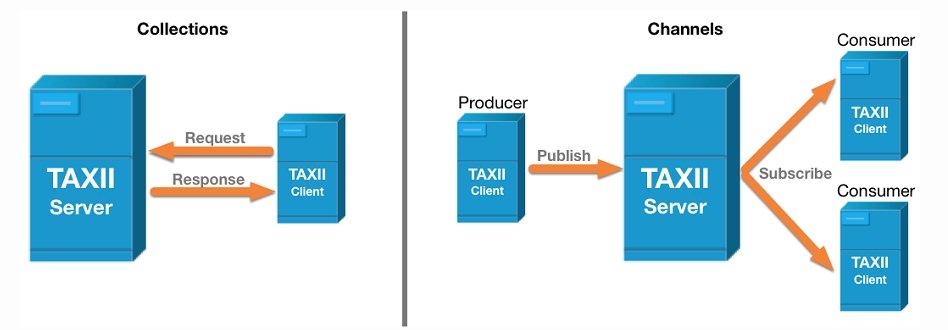
TAXII is a cybersecurity framework designed for transporting cyber threat intelligence between organizations securely and automatically. While STIX defines the format of the threat data, TAXII acts as the communication mechanism used to exchange that data over networks.
TAXII uses standard HTTPS and REST APIs, making it compatible with many modern cybersecurity platforms.
3. OpenIOC
OpenIOC is an open-source framework originally developed by Mandiant for sharing indicators of compromise related to cyberattacks.
It allows organizations to describe suspicious artifacts such as malicious files, registry modifications, processes, and network connections using XML-based definitions.
OpenIOC became popular in digital forensics and incident response (IR) because it helps security analysts identify signs of compromise across systems.
4. MITRE ATT&CK Framework
The MITRE ATT&CK Framework is one of the most widely used cybersecurity knowledge bases in the world. ATT&CK stands for Adversarial Tactics, Techniques, and Common Knowledge. It provides detailed information about how attackers operate during real-world cyberattacks.
The framework categorizes attacker behavior into tactics and techniques such as initial access, privilege escalation, persistence, lateral movement, and data exfiltration.
Today, ATT&CK is heavily used by SOC teams, threat hunters, red teams, and blue teams.
5. Diamond Model of Intrusion Analysis
The Diamond Model of Intrusion Analysis is an analytical framework used to understand cyber intrusions by studying relationships between four key components:
- Adversary
- Infrastructure
- Capability
- Victim
This model helps threat intelligence analysts understand attacker behavior and connect related attack events. The Diamond Model is especially useful during threat investigations and cyber campaign analysis.
6. Cyber Kill Chain
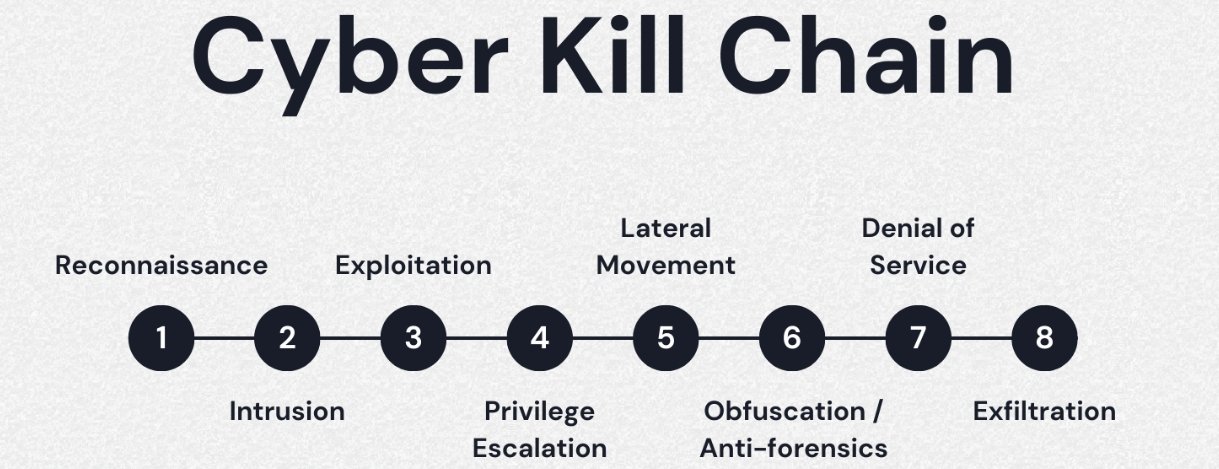
The Cyber Kill Chain was originally developed by Lockheed Martin to describe the stages of a cyberattack. The framework breaks attacks into multiple phases, helping defenders identify and stop threats before attackers achieve their objectives.
Stages of the Cyber Kill Chain
- Reconnaissance
- Weaponization
- Delivery
- Exploitation
- Installation
- Command and Control (C2)
- Actions on Objectives
The Cyber Kill Chain remains one of the most recognized cybersecurity models for understanding attack progression.
7. OCTAVE (Operationally Critical Threat, Asset, and Vulnerability Evaluation)
OCTAVE is a risk-based security assessment methodology developed by Carnegie Mellon University Software Engineering Institute.
Unlike technical attack-focused frameworks, OCTAVE focuses more on organizational risk management, operational processes, and business impact.
The methodology helps organizations identify critical assets, assess risks, and improve internal security practices.
8. Trike
Trike is an open-source threat modeling methodology focused on risk management and auditing. It helps organizations define acceptable risk levels and analyze threats based on those risk requirements.
Trike is often used in environments where compliance and auditability are important.
9. STRIDE
STRIDE is a popular threat modeling methodology created by Microsoft for improving application security during software development.
The name STRIDE represents six categories of security threats.
STRIDE Categories
- S – Spoofing
- T – Tampering
- R – Repudiation
- I – Information Disclosure
- D – Denial of Service
- E – Elevation of Privilege
STRIDE helps developers identify security weaknesses early in the software development life cycle.
10. Visual, Agile, and Simple Threat Modeling (VAST)
VAST is a threat modeling methodology designed specifically for Agile and DevSecOps environments. The framework focuses on scalability and simplicity, making it easier for development teams to integrate security into modern software development practices.
VAST supports large organizations with multiple applications and rapid development cycles.
11. Process for Attack Simulation and Threat Analysis (PASTA)
PASTA is a risk-centric threat modeling methodology that combines technical threat analysis with business objectives. The framework helps organizations simulate attacks, identify vulnerabilities, and understand business risks associated with cyber threats.
PASTA is widely used in enterprises that require detailed security and risk assessments.
Each methodology serves a different purpose. Some are focused on application security, while others help with intelligence sharing, attack analysis, or business risk management.
Choosing the right framework depends on the organization’s goals, security maturity, and operational requirements.
In summary, threat modeling has become an essential part of modern cybersecurity strategies. As cyber risks continue to grow, understanding these frameworks can significantly improve an organization’s ability to detect, analyze, and respond to attacks effectively.