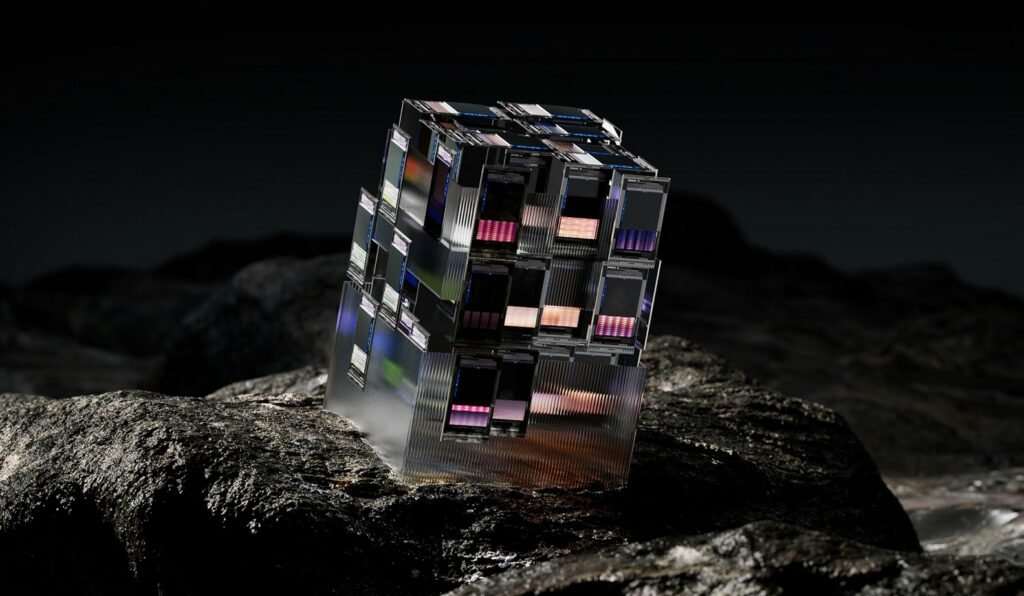

Supercomputers are among the most powerful machines ever built. They perform trillions and sometimes quadrillions of calculations per second, helping scientists solve complex problems in fields like climate modeling, artificial intelligence, space research, medicine, and national security.
Countries that invest heavily in supercomputers often lead in technology, scientific research, and innovation. According to recent global rankings, several nations dominate the world when it comes to the number of installed supercomputers.
Here is a look at the countries with the most supercomputers in the world.
United States – 171 Supercomputers
The United States leads the world by a huge margin with 171 supercomputers. Many of the world’s most powerful systems are located in U.S. national laboratories and research institutions.
American supercomputers support projects in AI development, weather prediction, defense technology, pharmaceutical research, and space exploration. Institutions like Oak Ridge National Laboratory and Lawrence Livermore National Laboratory operate some of the fastest machines on the planet.
Japan – 43 Supercomputers
Japan holds the second position with 43 supercomputers. The country is well known for its advanced computing infrastructure, including the famous Fugaku supercomputer, which has ranked among the fastest in the world.
Japanese supercomputers are used for earthquake simulations, climate research, medical discoveries, and robotics development.
Germany – 40 Supercomputers
Germany ranks third with 40 supercomputers spread across universities and scientific research centers. The country heavily invests in engineering, automotive simulations, climate science, and AI research.
German institutions such as the Jülich Supercomputing Centre play a key role in Europe’s high-performance computing landscape.
China – 40 Supercomputers
China also operates 40 supercomputers, placing it among the global leaders in high-performance computing. The country has previously developed some of the fastest supercomputers in the world, including the famous Sunway TaihuLight.
Chinese supercomputers are widely used for scientific simulations, military research, and artificial intelligence development.
France – 23 Supercomputers
France continues to strengthen its presence in the European high-performance computing sector with 23 supercomputers. These systems support aerospace research, nuclear simulations, and climate modeling.
Organizations such as GENCI (Grand Équipement National de Calcul Intensif) coordinate France’s supercomputing infrastructure.
Other Countries With Significant Supercomputing Power
Several other countries also maintain strong supercomputing capabilities:
- Canada – 19 supercomputers
- Italy – 18 supercomputers
- South Korea – 15 supercomputers
- Taiwan – 10 supercomputers
- Brazil – 10 supercomputers
- Norway – 9 supercomputers
- United Kingdom – 9 supercomputers
- Sweden – 8 supercomputers
- Poland – 8 supercomputers
- Netherlands – 7 supercomputers
These nations use high-performance computing for scientific research, weather forecasting, AI training, medical simulations, and industrial innovation.
Supercomputers are essential for solving problems that normal computers cannot handle. They help researchers:
- Predict extreme weather and climate change
- Develop new medicines and vaccines
- Train advanced artificial intelligence models
- Simulate space missions and nuclear physics
- Improve engineering and automotive design
As technology continues to evolve, countries investing in supercomputing will gain a major advantage in scientific discovery, economic growth, and national security. The race for faster supercomputers is accelerating. Many countries are now developing exascale supercomputers, capable of performing more than one quintillion calculations per second.
With increasing demand for AI, big data analytics, and scientific simulations, the global competition in supercomputing is expected to grow even stronger in the coming years.

